Have you ever picked up a tiny object and wondered, “Is this about 3 centimeters long?” It sounds like such a small question, yet it pops up more often than most folks realise.
Maybe you’re working on a school project, planning a DIY craft, shopping online, or trying to estimate a measurement without having a ruler nearby. Funny enough, our eyes are decent at guessing size, but they also trick us from time to time. Thats just how it goes.
Knowing what is 3 cm in real life can save you from making small mistakes that become surprisingly annoying later. A plant pot that looked perfect online arrives much smaller than expected.
A drawer knob seems larger in the product photo than it actually is. These little surprises remind us why having a reliable visual reference matters.
In this guide, we’ll explore 10 common things that are 3 centimeters big, explain how big is 3 cm, compare it with familiar objects, and show practical ways to estimate this measurement without special tools.
Whether you’re curious about 3 cm in inches, learning about the metric system, or simply looking for everyday objects that are 3 cm, this guide will help you build a better sense of scale.
| Object | Approximate Size | Why It’s a Good 3 cm Reference |
|---|---|---|
| Bottle Cap | 3 cm diameter | Common water or soft drink bottle cap. |
| Large Coin | Around 3 cm diameter | Many large coins are close to this size. |
| Key Head | About 3 cm wide | The top part of many house keys. |
| Marker Cap | Around 3 cm long | Fits closely with a 3 cm measurement. |
| Small Candle | About 3 cm diameter | Tea light or decorative candles. |
| Lip Balm Stick | Around 3 cm wide | Many lip balm containers match this size. |
| Watch Dial | Approximately 30 millimeters (3 cm) | Small watch faces are often this diameter. |
| Mini Cookie | Around 1.18 inches (3 cm) | A small cookie is a handy visual comparison. |
| Glue Stick | About 3 cm wide | Standard glue stick width is close to 3 cm. |
| Drawer Knob | Around 3 cm diameter | Common cabinet and drawer knobs. |
How Big Is 3 Centimeters?
Before comparing objects, it’s helpful to understand the actual measurement.
3 centimeters equals:
- 3 cm
- 30 millimeters
- 1.18 inches
- 0.03 meters
If you use the metric system, this measurement feels fairly ordinary because centimeters are commonly used for everyday tasks. In the imperial system, however, people usually think in inches, making 1.18 inches a more familiar comparison.
So, how long is 3 cm?
Imagine placing your thumb on a table. For many adults, the width of the upper part of the thumb is close to 3 centimeters, though everyone’s hands are slightly different. That’s why body references are useful for quick estimates but shouldn’t replace accurate tools.
When someone asks, “What does 3 cm look like?”, the easiest answer is that it’s about the width of a large bottle cap or roughly the diameter of a small cookie. Those simple comparisons are much easier to remember than a number alone.
Understanding 3 cm in Inches and Millimeters
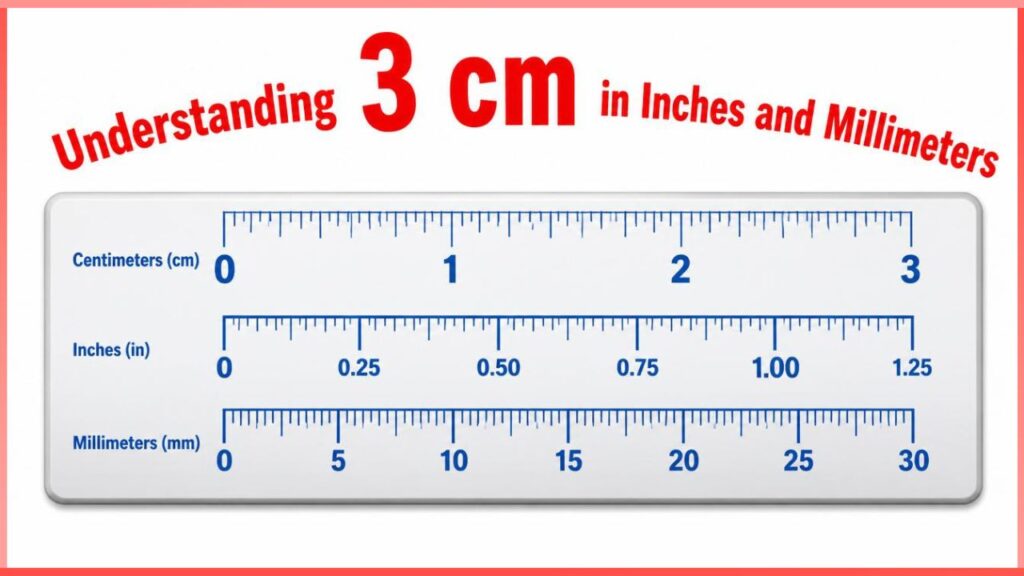
Many people search for 3 centimeters in inches because they work with products listed in different measuring systems.
Here’s the conversion:
- 3 centimeters = 30 millimeters
- 3 centimeters = 1.18 inches
Since one centimeter contains 10 millimeters, converting 3 cm into 30 millimeters is straightforward.
Similarly, because one inch equals approximately 2.54 centimeters, dividing 3 by 2.54 gives 1.18 inches.
Knowing these conversions becomes useful when reading craft instructions, buying furniture, comparing electronics, or checking product specifications online.
You might notice that international websites switch between metric measurements and imperial measurements, so understanding both systems helps avoid confusion.
Why Visual Comparisons Make Measurements Easier
Numbers alone rarely stay in our memory. Visual images do.
Think about asking someone how long 30 millimeters is. They may hesitate. Show them a bottle cap, though, and suddenly the answer feels obvious.
That’s why teachers often encourage students to compare common objects instead of memorizing measurements.
Visual references are especially useful for:
- School work
- Crafts
- DIY projects
- Office work
- Shopping
- Decoration planning
- Home measurements
Instead of carrying a measuring tape everywhere, you begin developing an instinct for estimating object size.
Can You Measure 3 cm Without a Ruler?
Yes, although the estimate won’t always be perfect.
If you don’t have a ruler, several everyday references can help.
One common method uses your thumb width. For many adults, the thumb measures close to 3 cm, making it one of the easiest natural references.
Some people also use the combined width of two fingers, although finger sizes vary considerably between individuals.
Other quick methods include comparing against familiar objects you already know measure roughly 3 centimeters.
While these techniques won’t replace precise measuring tools, they’re surprisingly helpful when making rough size estimation during shopping, crafting, or arranging decorations.
1. Bottle Cap
One of the easiest examples of objects that are 3 cm is a standard bottle cap from many water bottle brands.
Although sizes vary slightly depending on the manufacturer, many plastic bottle caps have a diameter close to 3 centimeters.
The next time you finish a bottle of water, place the cap in your hand and notice how compact it feels. That tiny circle becomes an excellent mental picture whenever someone asks, “How big is 3 cm?”
Bottle caps are frequently used in children’s classroom activities because they’re inexpensive, safe, and readily available. Teachers sometimes use them when explaining object dimensions, diameter measurement, and basic geometry.
2. Large Coin
Another useful comparison is a large coin.
Different countries produce coins in different sizes, so not every large coin measures exactly 3 cm, but many come very close.
Coins make excellent measurement reference tools because they’re manufactured with consistent dimensions. Once you become familiar with the size of one, estimating similar lengths becomes much easier.
Many art teachers even ask students to trace coins when learning about circles, width comparison, and accurate drawing techniques.
3. Key Head

The upper portion of many household keys, often called the key head, measures around 3 centimeters across.
Although the metal blade extends much farther, the rounded or rectangular grip frequently falls near this measurement.
Keys are something almost everyone carries every day, making them another convenient visual guide.
The next time someone asks what objects are 3 cm, simply look at your house key. Chances are it’s remarkably close.
4. Marker Cap
A standard permanent marker cap is another surprisingly accurate comparison.
Depending on the brand, the cap’s length or diameter often approaches 3 cm.
This makes markers useful in classrooms where students are learning about measuring length, object size, and practical estimation.
Teachers sometimes encourage students to compare classroom supplies before reaching for a measuring scale. It builds confidence in visual judgment while reinforcing mathematical concepts.
5. Small Candle
Many decorative tea-light style or birthday candles have a diameter close to 3 centimeters.
These candles appear in birthday celebrations, weddings, holiday decorations, and festive dinners.
Craft enthusiasts often use candle dimensions while planning centerpieces or handmade decorations. Having a mental image of a candle’s width helps estimate spacing between decorative items without constantly measuring every detail.
This practical skill becomes valuable during decoration planning, especially when arranging multiple objects on a small table or shelf.
People often underestimate how useful simple measurement examples can become in everyday life. Once your mind connects 3 cm with familiar objects like a bottle cap, large coin, key head, marker cap, and small candle, estimating similar lengths becomes much more natural.
Instead of thinking about abstract numbers, you’ll begin recognizing measurements almost automatically a handy habit whether you’re completing school measurement activities, organizing a DIY workspace, or comparing product dimensions while shopping online.
6. Lip Balm Stick
A classic lip balm stick is another excellent 3 cm comparison. While the entire tube is much longer, the rounded base or the width of many popular lip balm containers is often close to 3 centimeters. It’s one of those little things you probably toss into a pocket or handbag without giving its size much thought.
Then one day, when someone asks, “What does 3 cm look like?”, you’ll suddenly remember that tiny tube sitting in your drawer. Kinda funny how memory works like that.
Because lip balm is so common, it makes a practical measurement reference for students, travelers, and anyone who doesn’t have a ruler nearby. Although the exact object dimensions vary by brand, many are close enough for rough estimating measurements.
7. Watch Dial
Many smaller wristwatches feature a watch dial with a diameter of around 3 cm. Women’s watches, minimalist designs, and vintage styles often fall into this range, although sports watches can be noticeably larger.
If you’ve ever browsed watches online, you’ve probably seen specifications listed as 30 mm, 32 mm, or 36 mm. A watch face measuring 30 millimeters is exactly 3 centimeters, making it a perfect example of 3 cm measurement examples.
This comparison is particularly useful when shopping online because product photos can make watches appear much larger or smaller than they really are. Understanding the actual measurement helps you picture the watch on your wrist before making a purchase.
8. Mini Cookie
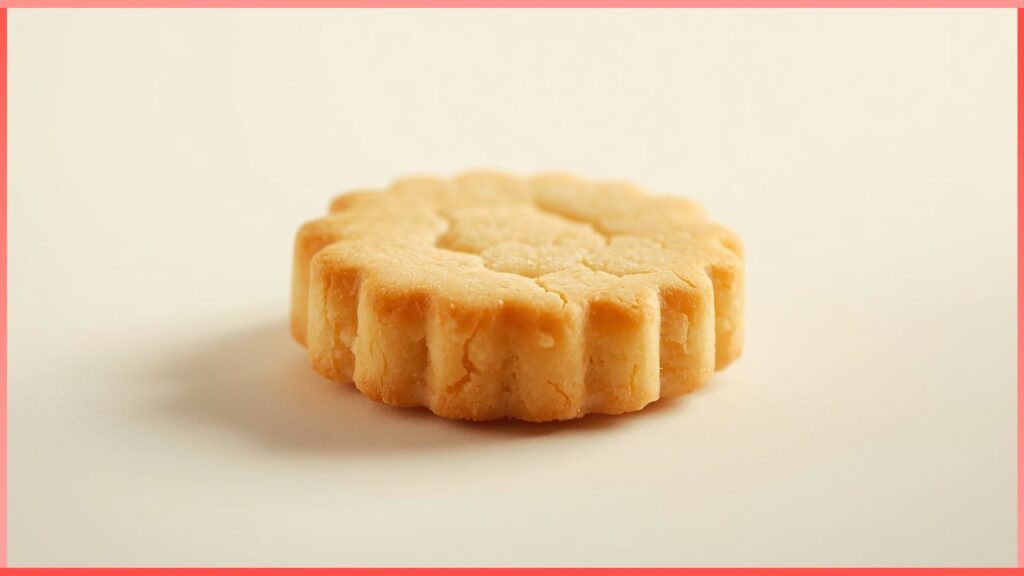
A small homemade or bakery-style mini cookie often measures around 3 centimeters across. Of course, cookies aren’t made to engineering standards, so there will always be slight differences. Still, they’re an easy way to visualize 3 cm in a fun and memorable way.
Baking enthusiasts regularly work with metric measurements and imperial measurements, switching between recipes that use grams, centimeters, and inches. Knowing that a cookie is roughly 1.18 inches wide helps when following international recipes or decorating baked treats.
If you’re helping children learn about object size, cookies can make the lesson surprisingly enjoyable. Just try not to eat all the examples before the measuring begins.
9. Glue Stick
A standard school glue stick provides another useful comparison. The body of the glue stick is longer than 3 cm, but its width is often very close to that measurement.
Because glue sticks appear in classrooms, offices, and craft rooms, they’re excellent examples of common household items that are 3 cm.
Teachers frequently use them during school measurement activities, encouraging students to compare classroom supplies before measuring with a ruler.
This hands-on learning helps children develop stronger estimation skills and a better understanding of length comparison and width comparison.
Whether you’re assembling a scrapbook, creating greeting cards, or working on crafts, having familiar common objects as references can save time.
10. Drawer Knob
A round drawer knob is one of the best real-life examples of things that are 3 cm. Many cabinet and furniture knobs have a diameter between 28 and 32 millimeters, placing them very close to 3 centimeters.
Walk through your kitchen or bedroom, and you’ll likely find several knobs that fit this measurement. It’s an everyday example hiding in plain sight.
Home decorators often compare knob sizes before replacing cabinet hardware. Understanding 3 cm size helps ensure new hardware matches existing furniture and maintains a balanced appearance.
Quick 3 cm Size Comparison Chart
Here’s a handy visual size guide for remembering 3 centimeters:
| Everyday Object | Approximate Measurement |
|---|---|
| Bottle Cap | 3 cm |
| Large Coin | About 3 cm |
| Key Head | Around 3 cm |
| Marker Cap | Close to 3 cm |
| Small Candle | About 3 cm diameter |
| Lip Balm Stick | Around 3 cm width |
| Watch Dial | Approximately 30 millimeters |
| Mini Cookie | Roughly 1.18 inches across |
| Glue Stick | Around 3 cm width |
| Drawer Knob | About 3 centimeters diameter |
Remember that these are approximate measurements. Manufacturers may produce slightly different sizes depending on design and purpose.
Practical Uses for Understanding 3 cm
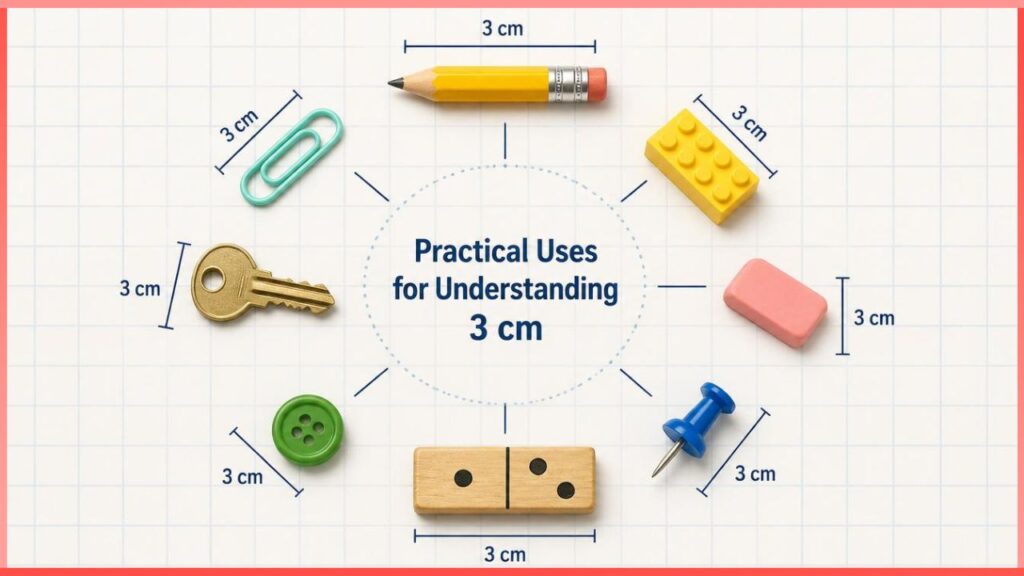
Knowing how long is 3 centimeters isn’t just useful for trivia. It has countless practical applications in daily life.
Home Measurements
When arranging picture frames, planning shelves, or choosing decorative accessories, being able to estimate 3 cm quickly makes planning much easier.
School Work
Students frequently complete assignments involving measuring length, comparing object dimensions, and learning the metric system. Familiar household objects help reinforce these lessons.
DIY Projects
Whether you’re drilling holes, spacing screws, or cutting craft materials, understanding 3 cm measurement improves accuracy without constantly reaching for measuring tools.
Office Work
Office supplies often require quick estimates. Labels, clips, folders, and desk organizers commonly involve measurements close to 3 centimeters.
Shopping
Shopping online becomes much easier when you already understand what is 3 cm compared to. Product descriptions suddenly feel much more meaningful when you can picture the actual dimensions.
Tips for Measuring 3 cm Without a Ruler
Sometimes you simply don’t have a ruler available. Fortunately, there are several ways to estimate 3 cm.
- Compare the object to a standard bottle cap.
- Use the width of many drawer knobs.
- Compare against a watch face diameter close to 30 mm.
- Estimate using your thumb width, which for many adults is close to 3 centimeters.
- Use familiar classroom supplies like a marker cap or glue stick.
These methods won’t replace precise measuring tools, but they’re excellent for quick measurement, measurement without ruler, and everyday estimation.
Frequently Asked Questions
How big is 3 cm?
3 centimeters equals 30 millimeters or 1.18 inches. It’s roughly the width of a bottle cap, a small drawer knob, or the face of some wristwatches.
What is 3 cm in inches?
3 cm in inches equals approximately 1.18 inches.
What is 30 mm in cm?
30 millimeters is exactly 3 centimeters.
Is 3 cm bigger than 1 inch?
Yes. Since 3 centimeters equals 1.18 inches, it is slightly larger than one inch.
What does 3 cm look like?
It looks similar to the diameter of a bottle cap, a small candle, a watch dial, or a drawer knob.
How can I measure 3 cm without a ruler?
You can compare it with familiar everyday objects that are 3 cm, use your thumb width, or estimate using common household items like a bottle cap or glue stick.
How Big Is 3 cm
3 cm is equal to 1.18 inches (30 millimeters). It is about the width of a bottle cap or a large coin, making it easy to visualize in everyday life.
3 cm
3 cm is a small but noticeable length commonly used to measure everyday objects. It is approximately 1.18 inches, making it useful for comparing the size of small items.
How Long Is 3 cm
3 cm is 30 millimeters or 1.18 inches long. It is roughly the width of two fingers placed together or the diameter of a standard bottle cap.
How Big Is 3cm
3cm is just over 1 inch in size, measuring exactly 1.18 inches. It is commonly compared to objects like a key head, marker cap, or large coin for easy estimation.
3 Centimeters
3 centimeters is a metric measurement equal to 30 mm or 1.18 inches. This size is commonly used for measuring small objects, crafts, and everyday household items.
Final Thoughts
Understanding what is 3 cm becomes much easier once you connect it with familiar items you see every day. Instead of trying to imagine an abstract number, think of a bottle cap, watch dial, marker cap, or drawer knob. These visual references make size estimation faster, more accurate, and much more practical.
Whether you’re working on DIY, helping children with school work, planning home improvements, or shopping online, knowing how big is 3 cm is a surprisingly useful skill. It bridges the gap between numbers on a page and the physical world around us.
The next time someone asks, “What objects are 3 cm long?”, you’ll have plenty of real-life examples ready. From household items to office supplies and crafting materials, common objects offer a simple way to understand measurements without overthinking them.
Do you know another everyday object that’s close to 3 centimeters? Share your favorite 3 cm examples or your own clever measurement guide in the comments. Your practical tip might help someone else visualize this compact but surprisingly important measurement even better.